To move away from a slow, spreadsheet-dependent budgeting process, Beyond Blue partnered with QMetrix to implement Workday Adaptive Planning. This transition automated their data integration and reporting, saving significant time and allowing the finance team to provide real-time strategic insights during key meetings.

Beyond Blue is an Australian mental health and wellbeing support organisation. They provide support programs to address issues related to depression, suicide, anxiety disorders and other related mental health conditions.

Facing the challenge of slow, manual processes
Beyond Blue did all their forecasting and budgeting on Excel. The process was entrenched in a bunch of linked spreadsheets, which created several problems. Above all, it was incredibly slow to perform updates and review those updates. Only one person could edit at a time, and it was common for files to be overwritten and changes lost. Sensitive payroll data was involved but security was difficult to manage.
If a single change was made, it could take an hour for it to flow through. How? The finance team would make a change, upload it to the ERP which could take 15 minutes, then run a report to see the impact of the change – that itself took an additional 30 minutes. It was a painful and inefficient process.
Beyond Blue’s main goal was to look for something that would get them off spreadsheets. They also wanted security, the ability to collaborate more easily, and to have the data in one place.
A solution to future-proof the organisation
Beyond Blue assessed various systems before selecting Workday Adaptive Planning. Joanne Papworth, Head of Finance and Commercial at Beyond Blue, says, “When we first looked at Workday Adaptive Planning, we were stunned at the capability. Other systems could solve our basic problem, but this would take us up another level to future proof us. We had thought about the prospect of getting off Excel, but Workday Adaptive Planning showed us we would be able to do so much more at the end of that functionality, especially when it comes to reporting”.
Workday then recommended QMetrix, with its significant expertise in the not-for-profit space, as Beyond Blue’s implementation partner.

Integration and automation – smooth and easy
Beyond Blue use Microsoft D365 Business Central as their ERP. They had to import and export from Excel to D365 Business Central – a tedious process that took a long time.
One of the first things the QMetrix team did was to integrate D365 Business Central with Workday Adaptive Planning. Now, integration runs overnight automatically. It can also be run anytime such as during month-end to upload actuals.
Actuals and plans are all in one place. And from there, they can easily pull through any numbers whether for ad-hoc analysis or reporting packs.
Simplified and streamlined – less is more
For an organisation their size, Beyond Blue has a lot of cost centres. Previously, they had 18 spreadsheets to manage them all. Imagine – when there was a variance to a forecast, they would have to work out which GL line and which spreadsheet it related to in order to find out the cause of the variance.
Now with Workday, assessing variances are so quick that Joanne describes it as a “game-changer”. The team can easily look at the whole picture, and just click on a cell to drill down into the details right away.
Secure and reliable – safe not sorry
With Workday, Beyond Blue don’t have to worry about Excel crashing or losing data because somebody else was in the file and they didn’t realise. There’s no need to think about spreadsheet links because everything is connected in real time and updates flow through the entire model.
Real-time results and time savings – lead to multiplied efficiencies
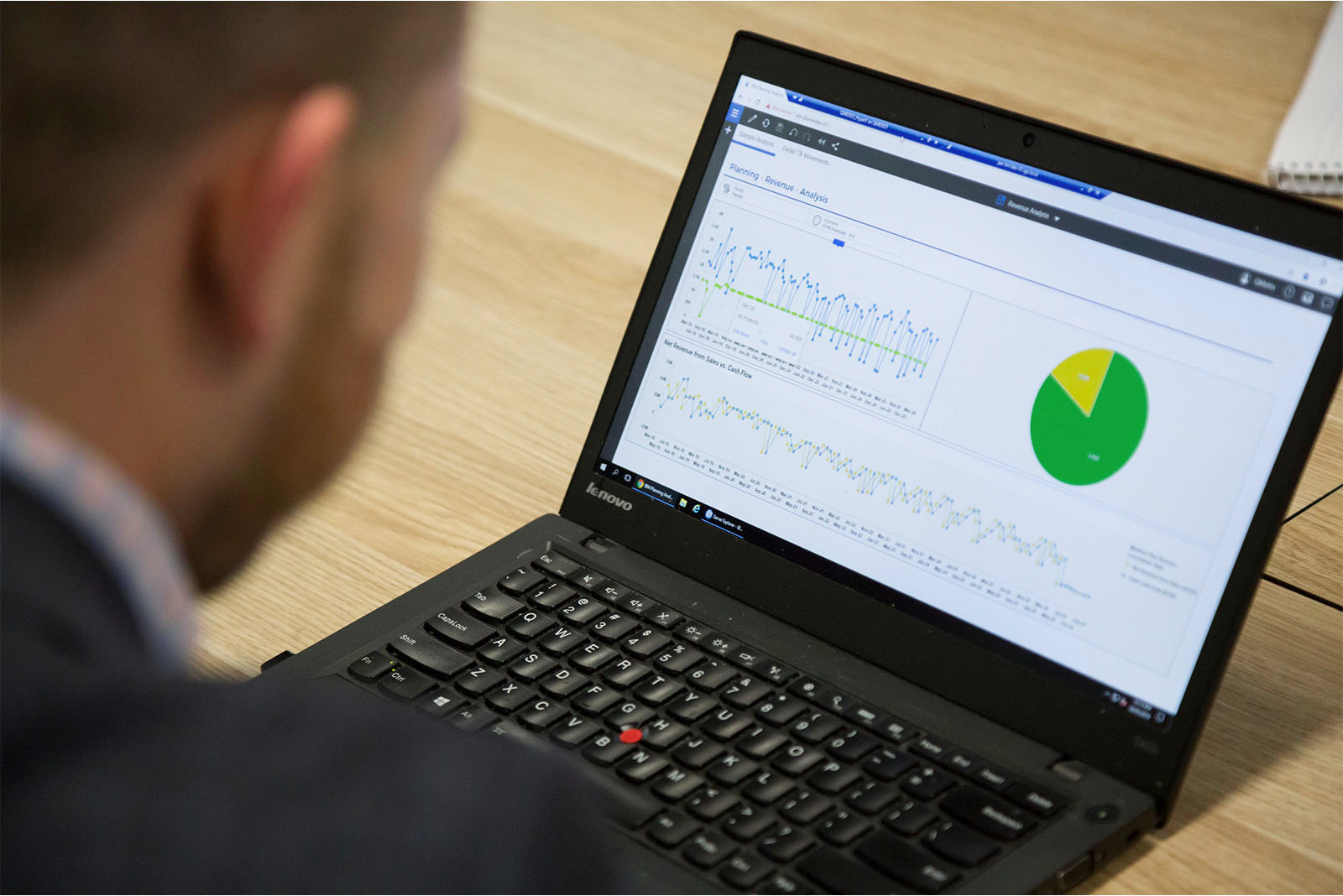
Instead of meeting with a stakeholder and then walking away to do the work and come back with the results, Beyond Blue can now make changes in real time during a meeting to see how they impact the forecast, on the spot.
The quick report updates are enabled by the Workday Adaptive Planning add-on, OfficeConnect, which links to Microsoft Excel, Word and PowerPoint. Within OfficeConnect and Web Reports, the team are also able to do quick analysis to slice and dice data and review at any level of granularity. They can also build reports easily on the fly.
All in all, Beyond Blue have saved a full FTE equivalent of time. As Joanne describes it, “The time savings have been amazing and significant”.
Payroll and other models – configured to specific business needs Workday Adaptive Planning has helped greatly with payroll modelling – a big cost and important component of the organisation.
In the past, Beyond Blue had to manually extract data from the payroll system and manually check changes for up to 250 staff. This was a time consuming process. Now that a payroll model has been built in Workday, the finance team just download the payroll dataset and load it into Workday. It automatically looks up and highlights differences between the payroll data and payroll planning sheet, so they can just review changes, significantly reducing the amount of repetitive work each month.
Another example is a model related to program funding. Specific programs have tied funding where a break-even P&L is required. QMetrix built a model which calculates what the revenue is in line with expenditure for a certain period, so Beyond Blue can forecast whether they are over or under spending.
Other models have also been built to facilitate a greater level of automation and ease. These include travel, revenue and cashflow models.

“The team at QMetrix worked with us closely to get a model that really suited the way we run our organisation. They were able to grasp what we required and implement that in Workday Adaptive Planning”.
– Joanne Papworth, Head of Finance and Commercial
Easy to use – for finance and the wider team
Something Beyond Blue has done that contributes to their success is having leaders who push for new technology and encourage the team to adopt it. Upon implementation, the finance team held regular sessions on how to use Workday Adaptive Planning, providing a forum to troubleshoot and share their learnings before approaching QMetrix if they needed further help.
Joanne says, “We have found Workday Adaptive Planning easy enough to pick up. Our finance team likes it, and the wider organisation likes it too. We have team members with varying levels of self-sufficiency, but they can all use it as they need. They enjoy being able to self-serve; they can go in and make changes themselves and see the potential effects in real-time instead of having to engage a business partner and wait. This means being able to make business decisions quickly”.
Workday Adaptive Planning and QMetrix – a good pair for finance teams
Workday Adaptive Planning has been recognised as a Gartner® Peer Insights Customers’ Choice for Financial Planning Software, and you can see why.
On working with QMetrix, Joanne says, “We loved working with the team who were so enthusiastic and helpful in trying to solve our problems and get us the best possible outcome. They were on-site at our office during the initial phase and that really helped us. We could ask questions and vice-versa, and they didn’t mind explaining things a second time around.”
“Working with QMetrix was so straightforward. They were responsive, knowledgeable and solution oriented. We thought the project would be harder and it would take longer to see the benefit. But it just worked very smoothly and they made things happen.”
– Joanne Papworth, Head of Finance and Commercial
Impact for Beyond Blue
Move your finance team beyond time-consuming manual tasks
Workday Adaptive Planning enables better budgeting, forecasting, precise cost management, and timely reporting to stakeholders.
Free resource
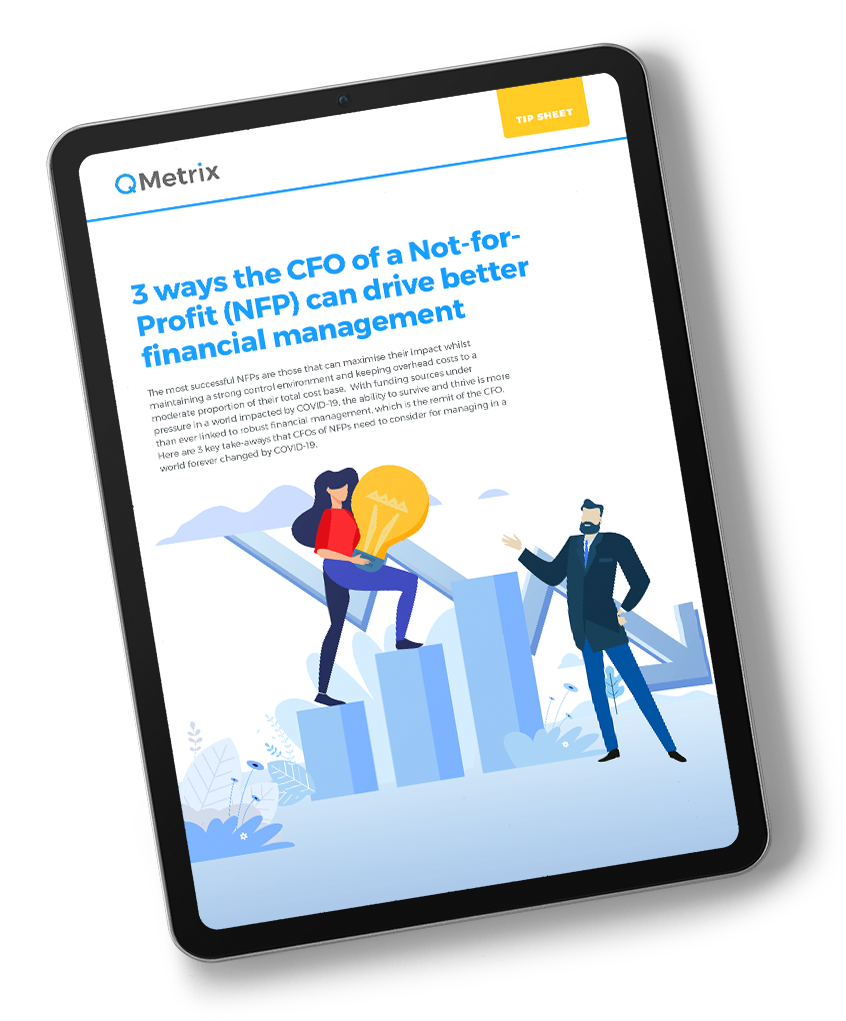
3 Ways the CFO of a not-for-profit can drive better financial management
The most successful NFPs are those that can leverage robust financial management to maximise impact. Here are 3 key things that CFOs of NFPs need to consider.