This global technology company’s small finance team previously relied on manual Excel processes that were time-consuming and difficult to scale alongside their rapid growth. Partnering with QMetrix to implement Workday Adaptive Planning enabled them to automate reporting and gain deeper financial insights, ultimately empowering the team to manage the entire solution in-house.

This global technology company empowers working teams to drive improvements. Their mobile-first operations platform gives teams the knowledge, tools, and processes they need to work safely and meet higher standards. Their platform is used in 180+ countries by 85,000 organisations, with 1 billion checks completed per year.

Scaling with a lean team was a challenge
The Company’s finance team consists of three people who were tasked with setting up a new process across the company. At that time, they were using Excel spreadsheets for budgeting and planning. Processes were lengthy, manual and cumbersome, and for a rapidly growing business, it was not scalable.
The team decided to explore options and compared several Financial Planning and Analysis (FP&A) tools.
They eventually chose Workday Adaptive Planning, with one of the key reasons being the out-of-the-box features it had. This would enable their small team to kick-start things more easily.
The solution: Empowering leaders with real-time financial insights
Working with QMetrix as implementation partner, one of the first things was to set up Workday Adaptive Planning to ingest NetSuite data and bring allocations in.
The team considered how to engage the different departments in the process and build it in a way that it would be scalable. Now, it is easy to upload any information into Adaptive Planning as required.
Over time, there have been software changes in other departments, and the team have been able to map it to Adaptive Planning with no issues.
From Excel headaches to easy reports
With many different arms of the business, from software to hardware, and marketplace to insurance, there are many budget owners at the Company.
They used to do monthly week-by-week forecasts. It was a repeated cycle of “click, crash, merge, unmerge” in Excel – and this was even before they could get to the stage of reforecasting or getting actuals to the GL level. There was a lot of volume to get through and they also had to group many expenses together – it was “a headache”, as they describe it.
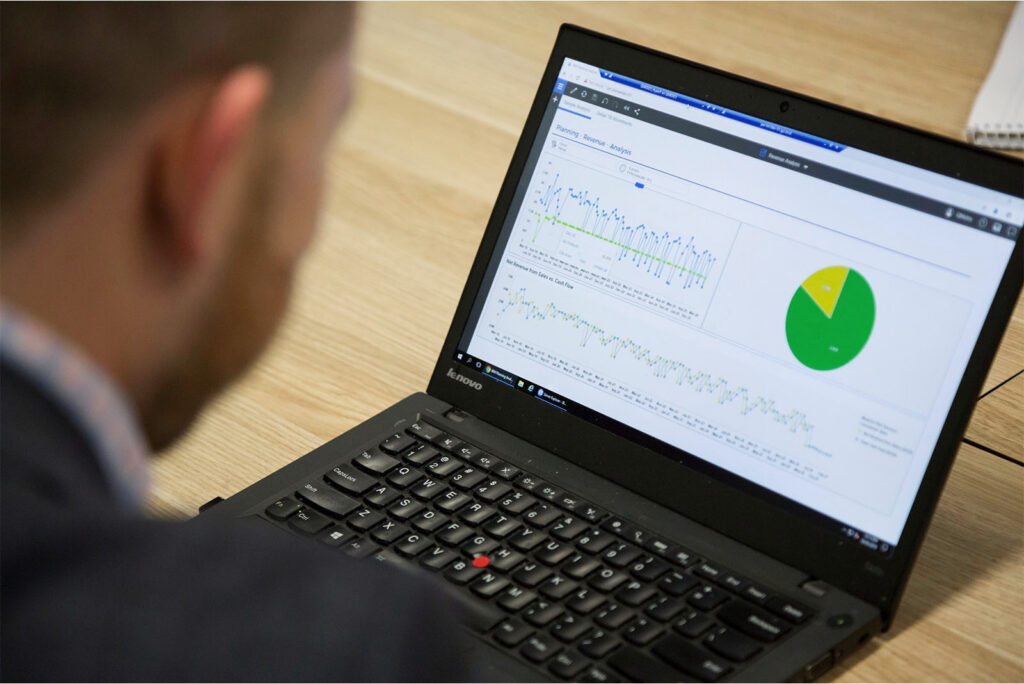
Now, with Adaptive Planning, it is easier for budget owners to access the data. Report layouts are customised so they can see the current month’s budget, the variance, the difference to last month’s forecast, and also have a view of their whole Financial Year by month, budget, new forecast, and actuals. They can easily visualise how the actuals are tracking to forecast spend, and it keeps them accountable.
During weekly executive meetings where costs are discussed, people are now across what they have spent. There is no longer a black hole where people say, “I’m not sure what was in this cost”. Instead, they can easily drill-through to specific transactions, provide confident answers, and have meaningful discussions.
The finance team also report financials to investors and other stakeholders.

“With Workday Adaptive Planning, it is really easy to export the financial reports we need, in the format we require. It has saved us countless hours every month just on this process alone. It wouldn’t have been sustainable for us to do this in Excel or other software. Adaptive Planning has allowed us to do a lot of things that we wouldn’t have been able to do before.”
– FP&A Analyst
Trusting the data and going deeper into the details
With Workday Adaptive Planning, the Company has been able to get more granular in terms of variance analysis. Instead of grouping items into big buckets in Excel, they can now slice and dice in several ways, and discuss what is truly driving variances.
For example, when it comes to travel, they can break it down by flights, accommodation and meals. It also saves them having to validate the totals match on every rolling spreadsheet, for every subsidiary and region.
Their FP&A Analyst says, “There are so many checks you can build in Excel, but it’s not possible for a team of three to be running all these checks every month end. With Adaptive Planning, we don’t have to worry about the accuracy of the numbers. There is a lot more trust in the data, and this has also freed up our time to do analysis”.

Building on a solid foundation, to now managing things in-house
One of the key criteria when selecting a Financial Planning and Analysis tool was that it needed to be easy to use and managed in-house eventually. Workday Adaptive Planning met this criteria.
A fundamental aspect in QMetrix’s implementation methodology is to use best practice and share knowledge during the project, so finance teams can manage the solution themselves moving forward, should they choose to.
Their FP&A Manager says, “None of our team had used Adaptive Planning before, but the way QMetrix set it up provided a solid foundation. The sheets and levels were done as we needed, and also allowed us to play around and build on it”.
“They also provided knowledge transfer and training materials which helped us especially at the beginning so we knew what to look for to achieve what we wanted.”
The Company continued on a support plan with QMetrix for a short while after the initial implementation project, and now they run things on their own completely.
“There is so much you can do with Adaptive Planning. The platform is evolving even as we speak. Their out-of-the-box features do well in getting the basics in place. It’s easy enough to learn things like putting in different accounts and values that need to be forecasted. From there, it depends on how far you want to take it. For our team, we like to learn on the go and experiment a lot. Now, we’re taking things to the next level, like figuring out how to scale things and introduce automation,” says their FP&A Manager.
“Working with QMetrix has been great. The team were heavily involved in the process, guiding us from start to finish with each project step and milestone. We are self-sufficient now, managing Adaptive Planning internally. But if we embark on bigger projects and would like external assistance, we would choose QMetrix again to help support us.”
– FP&A Manager
The impact for this global tech company
Workday Adaptive Planning helps FP&A teams become true business partners
Workday Adaptive Planning helps finance teams with better Financial Planning and Analysis. Explore how it can solve your budgeting, forecasting, planning and reporting challenges.