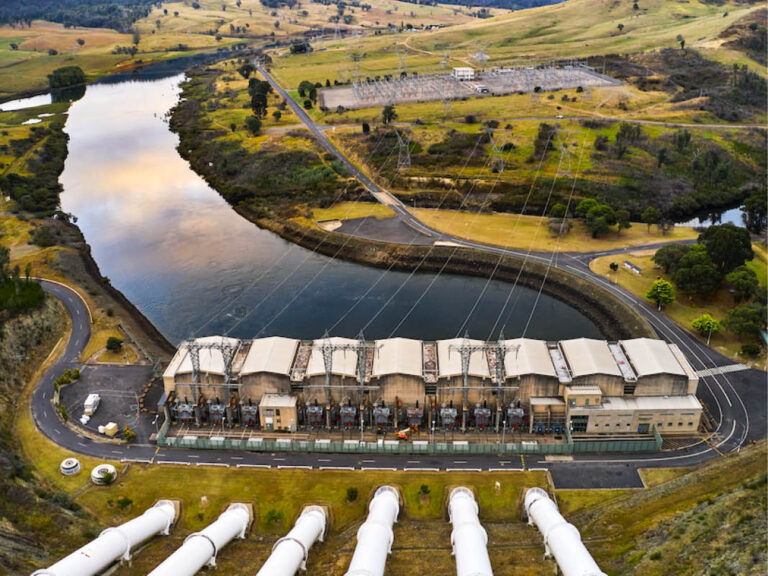
After experiencing disparate data and discrepancies between systems, this energy company turned things around by applying Master Data Management. It reduced data remediation and report production efforts, reclaiming more than 5,000 hours of work per year. They also saved millions of dollars through better management of expensive assets. Read the case study here.
This business is one of the largest producers of energy in Australia, supplying both Australian and international markets. Their work ranges from power generation, to gas exploration and production, power development projects, and energy sales. They provide customers with energy solutions including solar, LPG and broadband. In this case study, it is referred to as “the company”.

The challenge of misaligned systems and poor data quality
The company was trialing analytical capabilities to address business problems related to optimising asset placement, uplifting production efficiencies and reducing failures.
During the trial, a significant amount of effort was required to find master data sources of truth, align master data between multiple systems, and remediate the quality of the data. It took such a long time to get all the data together from the different systems that by the time they ran the analytical model, they had to start again with more recent data.
There were also discrepancies between systems, which meant many workshops were required to map their assets every time. Furthermore, the data could not really be trusted, so decision making was compromised.
The team realised they needed to invest in a Master Data Management (MDM) solution. It would provide the foundation to enable their reporting and analytics use cases, and improve the efficiency of their underlying business processes by:
- Reducing the effort to find, align and remediate master data
- Ensuring master data was of the required quality
- Integrating systems to improve the execution of business processes
- Allowing for easy access to fit-for-purpose master data for consumption

The solution: Mastering data for a complete and comprehensive view of assets
When searching for an MDM solution, the company chose Profisee for two key reasons. Firstly, Profisee had experience in the energy industry, and a pre-designed model based on an industry standard data model. The company could cherry pick elements from the model to accelerate their implementation based on an industry standard.
Secondly, Profisee had a proven track record of implementing MDM in the Microsoft Azure cloud, which was aligned to the company’s cloud strategy. Profisee then recommended QMetrix to support and enhance the company’s MDM solution.
Start small with quick wins, then scale up
The project started with an initial 6 month phase; they wanted to start small to ensure the solution worked end-to-end before scaling it. The project started with 3 source systems, 1 consuming system and ~10 data quality business rules. After uplifting the data quality and working with Information Stewards to de-duplicate asset records, they were matched to create ~12,000 asset Golden Records with ~15 attributes.
From the get-go, the company could see the end-to-end solution working and delivering value. It was consuming data from the source systems, checking the quality in seconds, matching up the records and providing master data for the consuming system to use.
Seeing the results, they were confident in the solution and ready to scale. Over the past few years, the company has grown the breadth and depth of their asset golden record from 12,000 to 20,000 records and from 15 to 70 attributes taken from 7 source systems. Very quickly, the team realised there would be significant value in connecting more consuming systems.
Currently, there are 10 consuming systems connected to Profisee MDM. They enable various processes that give the company a more complete view and comprehensive understanding of each asset across the value chain from planning and development, through to operations.
This in turn helps the company improve planning, reduce asset failures, increase production, reduce downtime via more proactive maintenance schedules, and increase efficiency in managing acquisitions and retirement of expensive assets.

Data on a silver platter
Previously, staff would have to source, integrate and align data from multiple systems to get what they needed. Now, key master data integrates with Profisee which provides fit-for-purpose master data. This data is easily available for consumption through an integration layer or MDM reporting functionality.
At the beginning of the project, the company saved 5,000 hours per annum. Now, years later with more improvements and users, the time savings have increased even more.

“With Profisee MDM, we didn’t have to do any of the hard work we did years ago, pulling data from each system bit by bit. Now, it’s like we are being handed data on a silver platter! The data is there – we can just use it. It has increased accessibility and useability, made analytics and reporting much easier, and we can trust it for decision making.”
– Senior Data Analyst
The MDM data has helped to reduce liability and restoration provisions in the millions, and is so well regarded that it is used for Australian Securities Exchange (ASX) reporting.
3 key ingredients for MDM success
Before any new data is brought into Profisee MDM, 3 key ingredients are required. These ingredients ensure that the consumers of the data continue to use and trust the data, and that the solution is sustainable.
- What: Develop an MDM standard to ensure a common understanding of what master data means across the business. This must be approved by the Information Owner.
- Where: Agree on a source of truth for the data as this source system will be integrated with the MDM solution.
- Who: Assign master data to the relevant Information Owner and Steward who are responsible for the initial uplift and ongoing quality of the data.
“QMetrix took time to learn our business and understand the journey. They were very knowledgeable about MDM and Profisee; they knew it inside out. During project delivery, they often went the extra mile to get things over the line.”
– Senior Data Analyst
The impacts of MDM for this energy company

Partner with MDM experts
QMetrix is Profisee’s first Field Certified Partner – Gold Status. Our Profisee team is the largest and most experienced in the region. We can provide a demonstration or initial proof of concept to help you ensure you make the right investment decision.

Overcome data fragmentation with Profisee
Profisee is one of the leading and fastest growing Master Data Management technologies. It enables organisations to build a trusted foundation of data and brings together every domain, source, user and record to deliver a single source of truth.
Download a PDF version of this energy company’s case study.