
TGI Sport was using spreadsheets to manage finances, and there were challenges with forecasting, visibility, and too much manual effort. They needed a robust financial planning tool would truly support the business – integrating seamlessly with NetSuite and supporting driver-based scenario modelling and planning activities. Here’s how they made it happen.

TGI Sport is a multi-disciplined sports infrastructure, technology and media rights business that shapes sports event experiences globally and engages millions of fans worldwide. Operating in 150 cities, their group of companies include TLA, Sportseen, ISG and Brand Brigade.
Financial planning challenges in a large and diverse group of companies
TGI Sport was using the accounting system NetSuite,and were looking for a financial planning solution. At that point, budgeting and reporting was done in spreadsheets and so much time was spent copying and pasting numbers across, with natural human error occurring.
In a large and diverse group of companies, it was difficult to track the most up-to-date spreadsheet and locate the live or final document. Forecasts were also not done throughout the year, which made it hard to realistically see how the budget was tracking and adjust the business accordingly.
There had already been a series of acquisitions with more coming, and the company was growing rapidly and globally. It was important to standardise their use of NetSuite and leverage the information in it, and get more from a budgeting and planning perspective.
TGI Sport were looking for a solution that could:
- Integrate with NetSuite
- Enable forecasting and better budgeting
- Provide a variety of reports across entities and countries
- Support driver-based modelling and scenario modelling
Moving from limited spreadsheets to a precise and powerful FP&A process
TGI explored Workday Adaptive Planning as a potential option. To decide whether it would work for them, they spoke to an organisation in the sports industry using the platform to understand the process and if the outcomes would be worth it.
The company shared a positive experience and recommended QMetrix as their solution partner.
Planning with actuals – not outdated budgets
First, TGI took the prior year’s budgets and actuals and put them into Workday Adaptive Planning. This included mapping information from NetSuite to ensure it was standardised across the 50 countries and 34 entities within the group.
Due to recent acquisitions, they also had to accommodate entities using other systems such as Xero, and map the information. They did a monthly journal to NetSuite, which was then consolidated to Workday Adaptive Planning.
With the new, standardised method, TGI now has the ability to understand and compare performance in a like-for-like fashion across departments and entities no matter what country they are in. They can also amend the budget easily on the run; data they input gets automatically fed into month-end and Year-to-Date numbers reported from Workday Adaptive Planning.
They are able to overlay actuals over the budget to facilitate a quick and easy re-forecast, and to see how they are tracking towards the year’s goal. This gives TGI the ability to make fact-based changes which impact end results. It changes the conversation from “how did we go” to “how are we going” and how they can move forward from here.

“If we just use budgets, we can’t actually pull levers and see where change is required. However, with the ability to re-forecast based on actuals, we have the opportunity to change the course of our destiny because we actually know where we are heading. It gives us better control of where we will end up”.
– Max Davis, Global Financial Controller
Reporting that builds understanding – with just a click
Previously when TGI wanted to see information, they would have to export data from NetSuite and other accounting systems, check to make sure it was in the right columns, then use Excel to build reports manually. This was a time consuming process.
Now, they just use Workday Adaptive Planning which easily splits information by entity, department or country. With just a click, business unit performance reports are generated, then emailed to senior managers who can evaluate what is going well and what needs to be fixed.
The board report is also created with just a click. Once all entries have been completed and eliminations done and posted, one click generates the monthly report. The layout is predefined in Excel through Workday Adaptive Planning OfficeConnect, and the data just needs to be refreshed and reviewed before it is sent out.
It is a far cry from the previous process which required 3 days each month. Max says, “It’s a much more streamlined process now. We don’t need to spend time compiling. We can spend that time analysing instead”.

Modelling based on business drivers
Rather than planning at just profit, cost centre and GL account level, Workday Adaptive Planning supports a more granular level of driver-based modelling. This is called multi-dimensional planning, whereby a combination of dimensions including product, customer, or location can be incorporated into the budget or forecast. It allows you to choose the dimensions to display, nest and filter by for planning purposes.
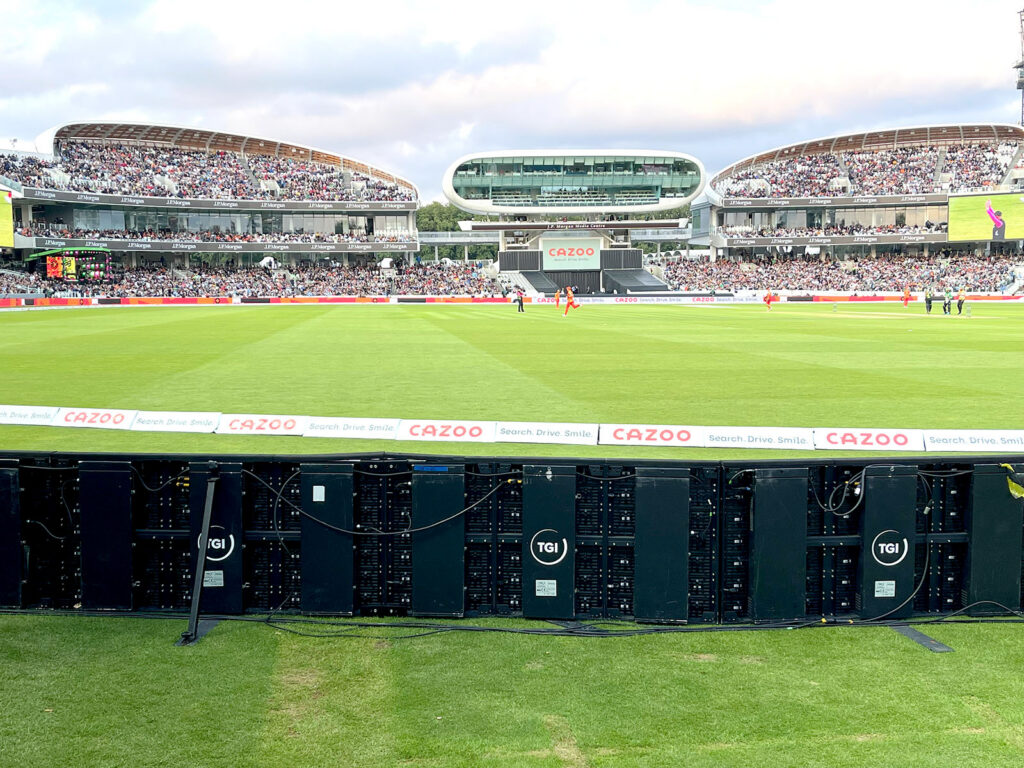
TGI operate over 18km of LED signage globally, and needed to standardise the way revenue was calculated. To do this, a LED signage model was built. Signage is displayed in locations like stadiums and sporting clubs, for different teams that play in matches, with varying amounts of advertising space – all of which could change.
Previously, there was a central sheet for everyone to refer to. They would update information in another spreadsheet, then compile information in a separate summary spreadsheet. There was a lot to copy and paste, and it was near impossible to do a forecast. It took a number of weeks to prepare the final spreadsheet, and up to 2 months to complete the budget for this.
Now with Workday Adaptive Planning, TGI have all the information in one place. They can change a number and see the flow on effect to the revenue numbers immediately. It is a more accurate budget that updates quickly as variables change. They are also able to maintain multiple versions to compare scenarios quickly.
There is less aggregating, collating, and spreadsheets of large volumes. It is easier to understand the full picture of what is happening with LED signage across the world, at a glance.

A giant Excel sheet: Familiar, but better
For TGI, one of the benefits of Workday Adaptive Planning is that it is like having a giant Excel spreadsheet that sits on top of NetSuite and pulls the data. You can get whatever number you like and manipulate it if you need to. But you also have the added benefit of tracking changes, adding comments, and having everyone work on the one live “document”.
This has been especially beneficial for a global company where financial controllers in the UK, USA and Europe have to communicate across time zones. Furthermore, finance team members are already familiar with the Excel-like interface and functions, making the learning curve less steep.
Max says, “We have 16 staff across the world using Workday Adaptive Planning. There have been huge benefits compared to using Excel. “There is no longer the time consuming need for emailing or sharing Google Docs, and making changes and sending things back. It is much neater. We can track and comment, and I love that we have a tool that enables us to efficiently support the business. It’s exactly what a leading global business should have”.
To help with adoption, QMetrix ran training sessions for the Australia team which were recorded and sent to international teams. More live sessions are being planned so global teams can also ask questions and reap the full benefits of Workday Adaptive Planning.
Great people to work with
TGI were recommended to QMetrix by an existing client, and now they are recommending QMetrix to others. Max says, “Every implementation is hard, and ours has not been straightforward, especially as we had changes along the way as a result of acquiring several new companies during the implementation period.”
“I appreciate how QMetrix went to extremes to get things fixed in a collaborative approach, working with our team. We had weekly catch ups throughout the project. This helped everyone see how things were going, be clear on timelines, and provided a platform to raise challenges.
They are great people to work with. They did their best and put in the extra effort to get things done. The QMetrix team is fantastic and I really appreciate their professionalism.”
– Max Davis, Global Financial Controller
The winning play: Impact for TGI Sport

TGI Sport drew on QMetrix’s Financial Planning and Analysis expertise
We empower your finance team to move beyond the “spreadsheet trap” and evolve into true strategic partners. Get a reliable source of timely data and accurate forward-looking analysis capabilities.

Accelerate your FP&A with Workday Adaptive Planning
Workday Adaptive Planning helps finance teams with better Financial Planning and Analysis. Explore how it can solve your budgeting, forecasting, planning and reporting challenges.