
The Profisee 2025 releases introduced significant feature sets across five key releases (R0 – R4). We have combined each 2025 release in our review, as we tracked the platform’s strategic focus on embedded artificial intelligence, deep native Microsoft Fabric integration, and enterprise-grade performance scaling throughout the year.
2025 R0: The baseline foundation
The 2025 R0 release set the functional foundation for the year, establishing the core framework required to support deeper cloud-native architecture, multi-tenant capabilities, and initial data steward productivity enhancements.
This baseline laid the groundwork for the platform’s subsequent transformation into an AI-driven, Fabric-native MDM ecosystem.
Key capabilities:
- New service providers: Profisee administrators can now choose SQL Server and OneLake as new Service Providers in Profisee Connect within the Administration section of the Profisee Portal experience. These providers allow Profisee users with previously configured SQL Server or OneLake databases to import/export tables and views between those databases and entities within Profisee (more on the providers here).
- Improved GetRecord performance: The GetRecord request in the Profisee REST API performs significantly faster due to removing unnecessary backend processes.
- Background transaction monitor: The Background Transaction Monitor Interval Timer system setting can now be set to 0. When set to 0, if the machine running Profisee is restarted, any queued event processing events will not be picked up until a new transition comes in, or whenever Eventing is paused and restarted.
- REST API – Record delete option ‘ClearReferencesBeforeDelete’: The new option ClearReferencesBeforeDelete on the Record Delete REST endpoint has been added. This option allows Domain-Based Attributes to be cleared when the parent record is deleted.
2025 R1: AI-Powered and lakehouse ready
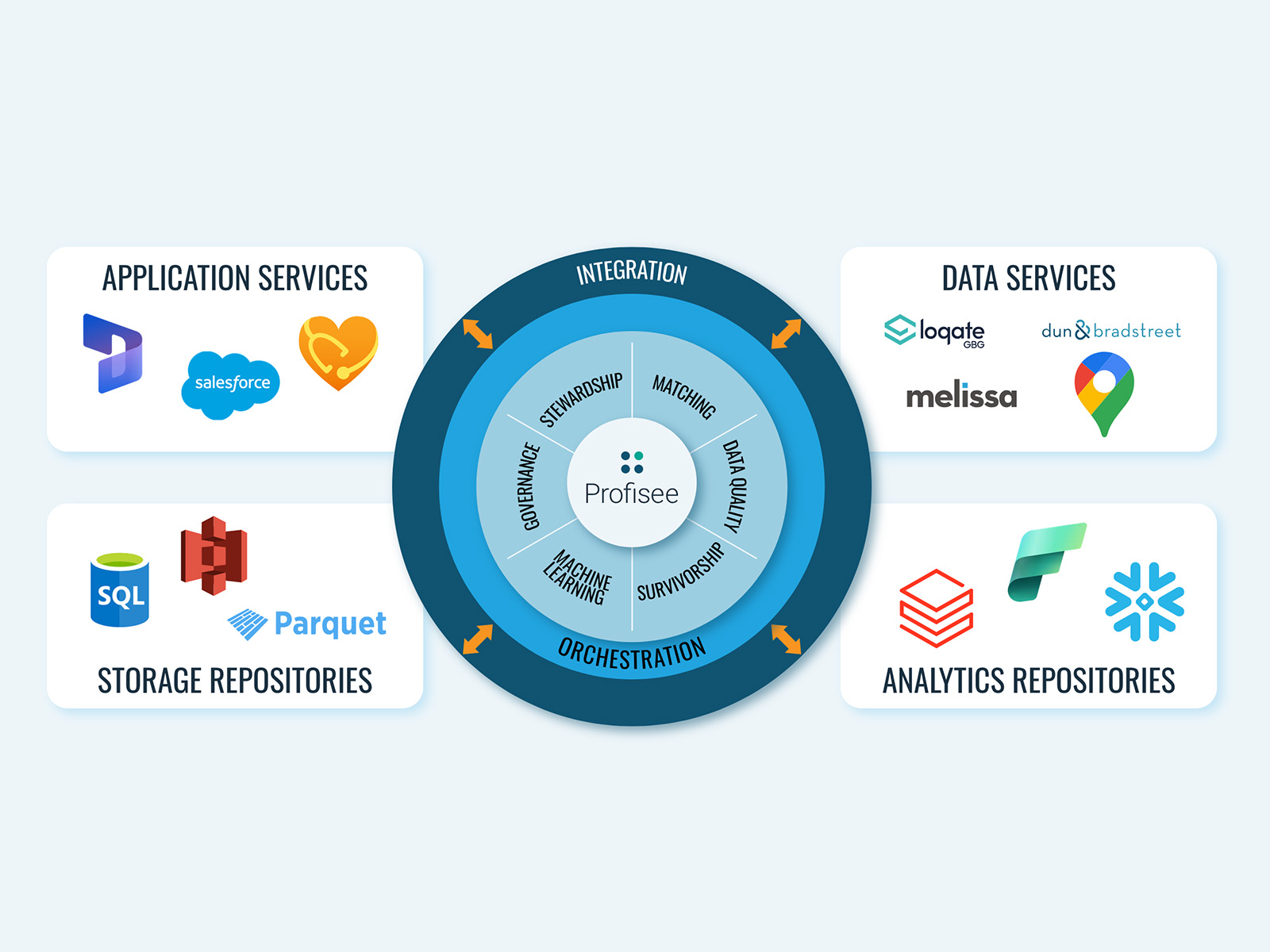
The 2025 R1 release marked a significant architectural expansion by introducing native Microsoft Fabric integration alongside low-code connectivity to major cloud data platforms, including Databricks, Snowflake, and Azure Synapse.
Key capabilities:
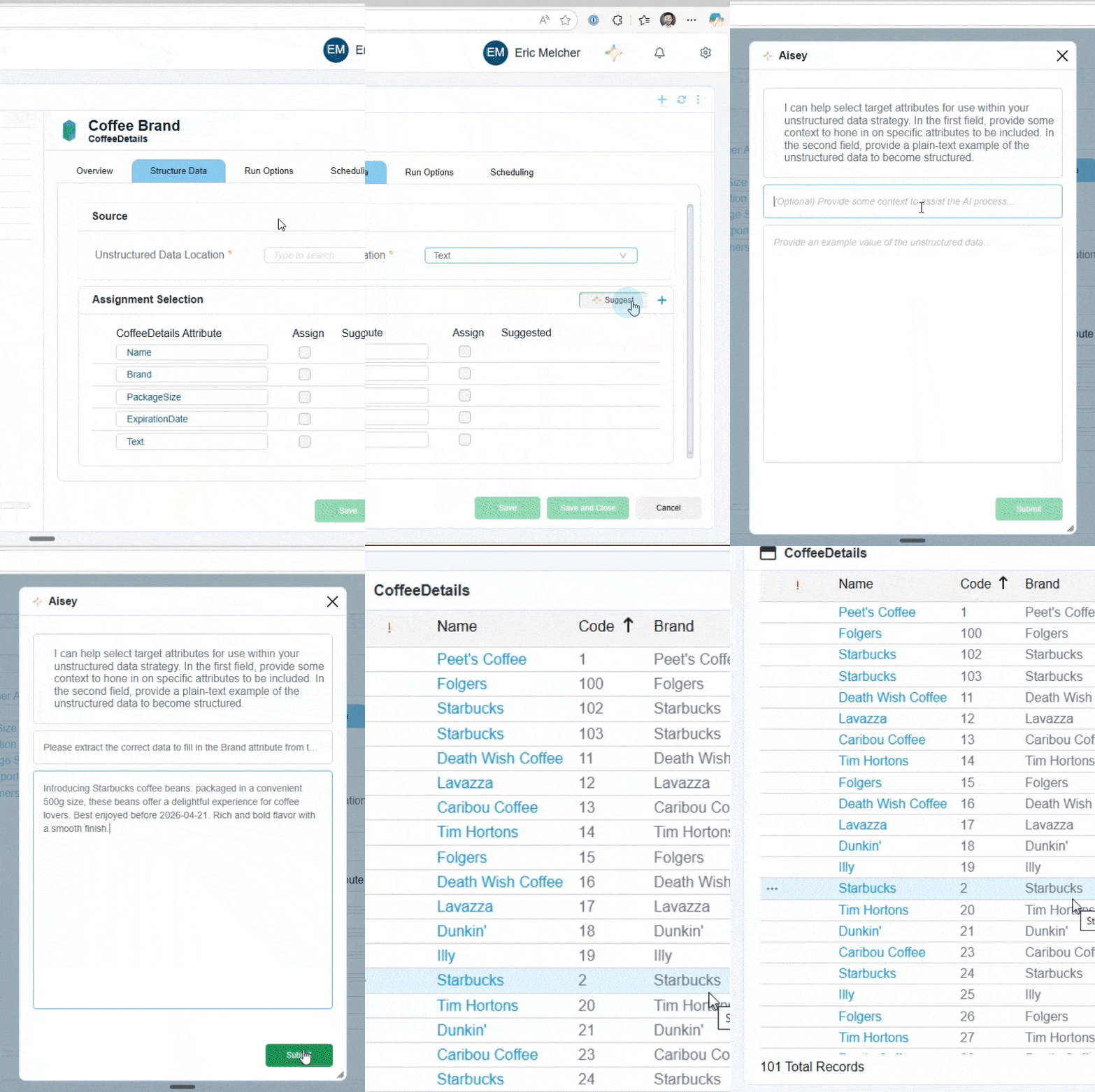
- The debut of the AI guide: R1 introduced Profisee’s initial AI-powered assistant framework, embedding context-aware guidance during data modelling, automated unstructured-to-structured text enrichment, and real-time triggered automation.
- Multi-cloud data synchronisation: Expanded data gateway options streamlined the pipeline delivery of gold-medallion master data directly into Lakehouses, enabling lower-latency business intelligence and real-time synchronisation.
- Global federated MDM: To support multinational governance compliance, new federated architectures allowed organisations to synchronise non-sensitive reference data between regional environments (such as APAC, EU, and NA) while adhering strictly to local data sovereignty laws.
- Native address verification: Built-in verification services for over 190 countries combined multi-point cross-verification (name, email, phone, and address) with automated geocoding.
2025 R2: Next-generation matching architecture
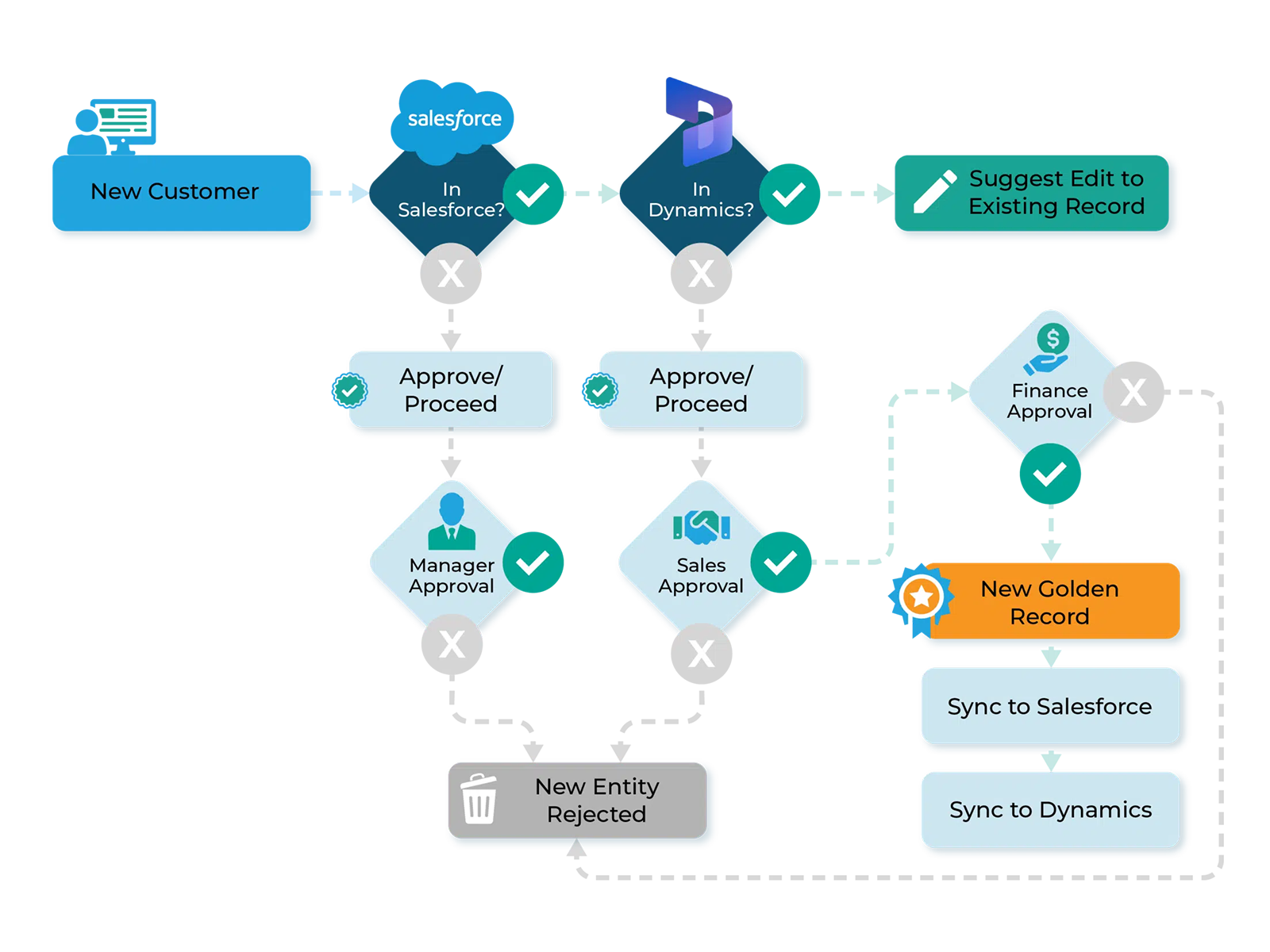
The 2025 R2 release delivered a complete, ground-up rewrite of Profisee’s core matching engine, transitioning from legacy, RAM-intensive in-memory indexing to a durable, SQL-based Similarity Graph table structure.
Key capabilities:
- 10x Faster processing: The architectural shift achieved a 25% increase in initial matching speeds, a 2.5x improvement in incremental processing, and a 26x improvement in real-time transaction processing. Multi-threading and optimised indexing compressed historical 12-hour batch matching jobs down to under 30 minutes.
- True High Availability (HA): Because matching states are written to durable graph tables, jobs are fully resilient to transient cloud outages. Interrupted matching processes automatically resume from their exact point of failure without requiring a full restart.
- Simplified rule configuration: Strategy configurations were streamlined, lowering the number of manual settings needed to build, test, and fine-tune complex corporate matching rules.
- Embedded Fabric matching: Following the core engine upgrade, Profisee embedded matching stewardship directly into the Microsoft Fabric workspace. This allowed data stewards to review, validate, and resolve duplicate records natively inside Fabric, eliminating cross-application data movement and reducing data drift.
2025 R3: Introducing ‘Aisey’ and full web administration
The 2025 R3 release formalised Profisee’s generative AI vision with the official launch of its embedded AI assistant, while pushing the core management suite closer to a completely browser-based experience.
Key capabilities:
- Meet Aisey: The platform’s native AI assistant was integrated into the Profisee Web Portal. Aisey launched with specialised features, including Aisey Help (providing instant, context-aware retrieval from Profisee’s learning libraries) and Aisey skills (allowing users to navigate configurations and build data models using natural language).
- Autonomous Aisey agents: These background agents act as automated data stewards, parsing unstructured text changes and executing data quality workflows independently while keeping human operators in the loop for complex approvals.
- 100% web-based admin: Modelling and administration tools were successfully migrated from the legacy Fast Apps Studio directly into the web browser. Users gained the ability to manage entities, define complex relationships, audit user activity, and import source data via Excel entirely from the web portal.
- Certified power platform connector: A new Microsoft-certified connector was introduced, allowing seamless data quality and MDM integration across Power Apps and Power Automate workflows.
2025 R4: Connected ecosystems and copilot agents
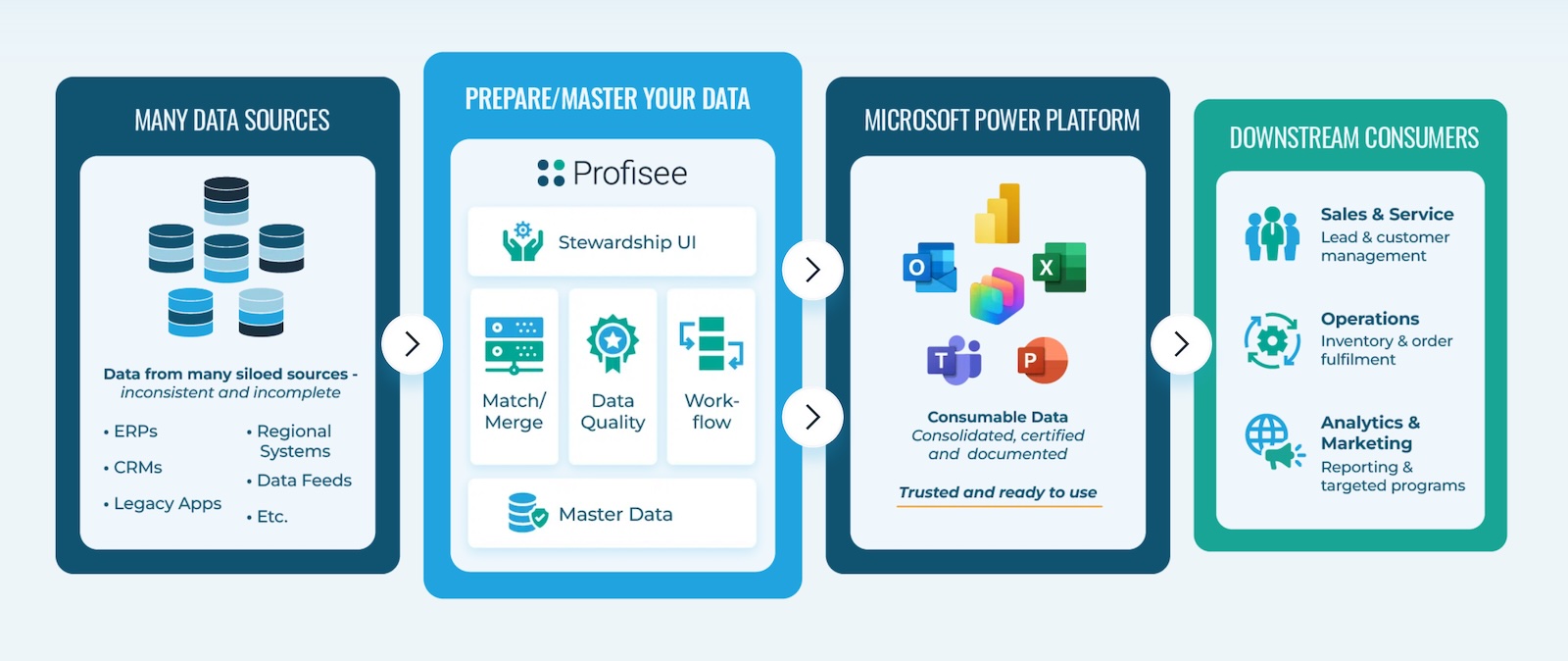
Closing out the year, the 2025 R4 release focused heavily on external connectivity, downstream operational consumption of trusted data, and deeper productivity integrations inside everyday Microsoft applications.
Key capabilities:
- Profisee Copilot agent for Microsoft: Extending data utility beyond traditional data teams, the new Copilot Agent brings trusted master data directly into Microsoft Teams and Microsoft Copilot, enabling enterprise employees to safely query master records via standard chat interfaces.
- Native Fabric data quality rules: Integration with Microsoft Fabric was deepened to allow the creation and management of data quality and survivorship rules directly inside the Fabric workspace, natively establishing an MDM-powered medallion architecture.
- Event-driven integration (Webhooks): Enhanced REST APIs and outbound webhooks introduced no-code configurations to stream real-time data change notifications to external enterprise message brokers like Kafka, Azure Service Bus, and Azure Functions.
- Dun & Bradstreet connector: A native, direct connector to Dun & Bradstreet’s Blocks service was added, empowering organisations to automatically enrich B2B customer master data with verified global firmographic profiles.
For guidance on implementing these new 2025 features within your data estate, or to view a tailored demonstration of the Microsoft Fabric and Aisey AI capabilities, please reach out to QMetrix MDM specialists.