Tennis Australia was using a limited legacy-on-premise system. They replaced it with Workday Adaptive to support budgeting, forecasting, workforce planning and reporting processes all in one platform. Read about the impacts and how quick scenario modelling helped them especially during the volatile COVID-19 period.

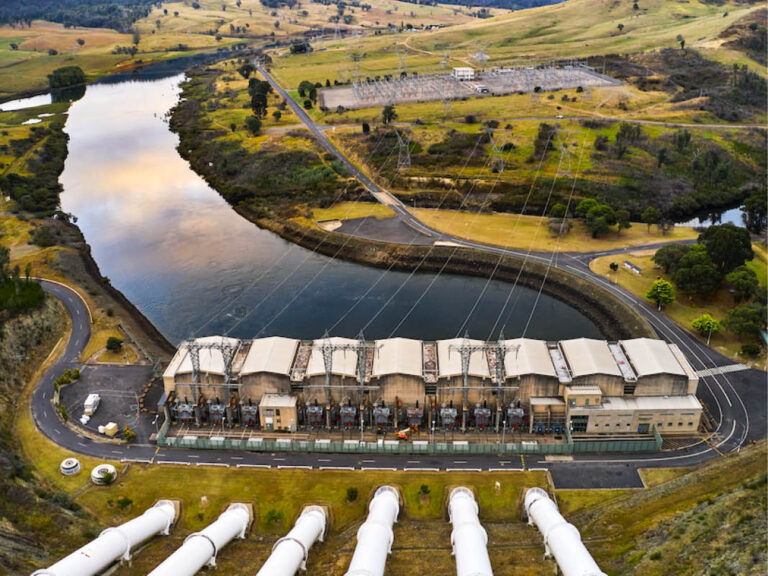
Tennis Australia promotes participation and performance in the sport. It also facilitates player development, stages local and international events and invests in tennis facilities around Australia. It organises the Australian Open event and partners with the seven state and territory associations across the country.

Tennis Australia’s challenge: A legacy system overdue for an update
Tennis Australia recently upgraded their ERP system to Workday Financial and Human Capital Management (HCM).
They were using a legacy, on-premise system for reporting and limited planning. However, based on business requirements, they wanted to replace it with Workday Adaptive Planning which would support their budgeting, forecasting, workforce planning and reporting process.
Tennis Australia selected Workday Adaptive Planning for several key reasons:
- Ease of use – less coding and scripting, more out-of-the-box features with the familiarity of an Excel-like interface
- The existing platform was outdated and hard to use, which resulted in Tennis Australia reverting back
to Excel spreadsheets - Strong scenario modelling and multi-currency planning capabilities
- Integration with Workday Financial and HCM so they could have everything on one platform
Their solution: Everything integrated and consolidated, in real-time
When working from Excel, there is always the issue of how to manage the integrity and credibility of the data despite best efforts.
With everything integrated, data now flows seamlessly between Workday Financials and HCM, and Workday Adaptive Planning. No CSV files or Excel sheets need to be collated and then manually entered or uploaded into each system. Everything is unified between both platforms.
Business users are able to work on things simultaneously with the most up-to-date data, collaborate on their plans in real time and track progress.
Importantly, the CFO, finance directors and finance business partners can oversee the process and step in when needed.
Simplified yet powerful multi-dimensional planning
With 100+ cost centres, planning in Excel was incredibly complex and simply not viable. There was too much room for error and version management was difficult to control and maintain.
With Workday Adaptive Planning, Tennis Australia was able to achieve multi-dimensional planning which include ledger accounts, spend and revenue categories, cost centres, events and projects.

“Our financial – actuals and plans – are integrated and consolidated. This means no more loose Excel sheets, we have an overview of everything that is being worked on. We do budgeting, forecasting, workforce planning and reporting all on one system.”
– Nirash Amarasinghe, Systems Accountant
Tennis Australia and their Member Association’s finance business partners were able to conduct what-if scenario planning in relation to multiple currencies to understand strategic impacts on both actuals and plans based on exchange rate differences. This was achieved by leveraging out-of-the-box features that Workday Adaptive Planning provides without any customised coding or setup.
The models were configured in a way that let executives set strategic goals at a high level. Based on that, cost centre managers and finance business partners could then plan for and achieve the desired outcome. It effectively allows for both top-down and bottom-up approaches, which is impossible with Excel and not as intuitive as some other systems.
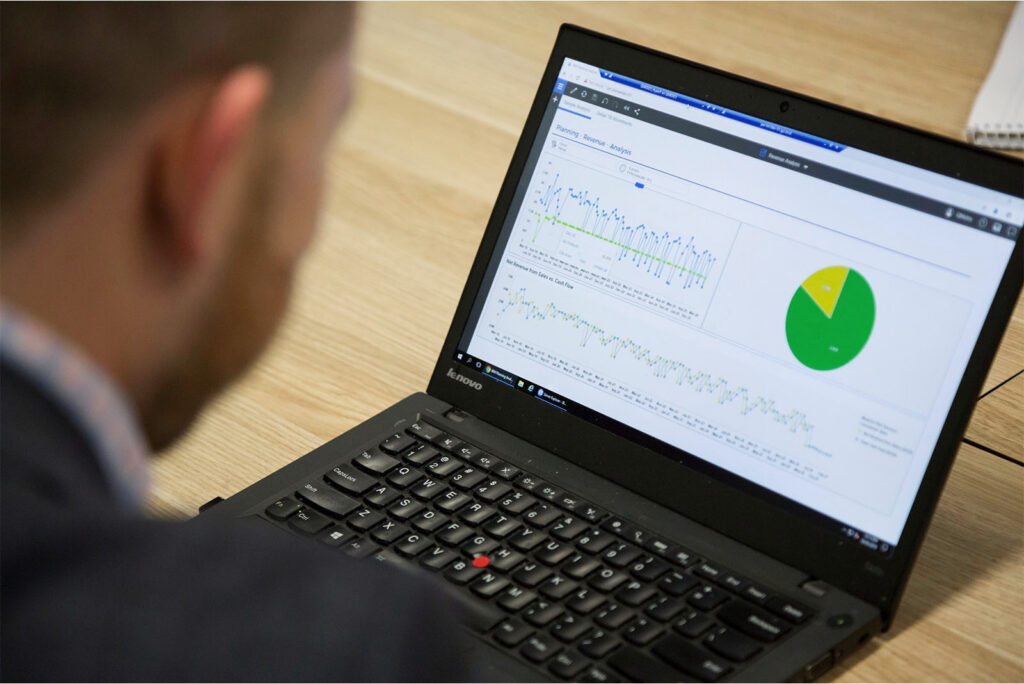
The planning models feed into visual dashboards which makes the information much easier to digest, analyse and evaluate against historical performance.
Navigating through uncertainties with powerful scenario modelling
Implementing Workday Adaptive Planning in 2020 proved to be good timing for Tennis Australia. This was when COVID-19 struck and brought volatility and uncertainty.
With restrictions based on social distancing, mask wearing and crowd limits, many scenarios had to be planned for Tennis Australia’s biggest event, the Australian Open. How would the government’s COVID-19 measures impact media and sponsorship? What if patron capacity reduced to 50%? What were the repercussions for ticket sales and revenue?
Planning with all this uncertainly was impossible with previous planning tools or with only Excel spreadsheets.
However with Workday Adaptive Planning, Tennis Australia was able to look at historical data for the last few years, create multiple scenarios quickly as situations changed, handle variances, and tweak and adjust assumptions that drove the various planning models.
Familiar like Excel – but much better
One of the strengths of Workday Adaptive Planning is OfficeConnect. This feature links the data within Adaptive Planning and provides reporting within Microsoft Excel, Word and PowerPoint.
Tennis Australia implemented OfficeConnect for reporting, such as board and financial management reporting, as well as board packs.
Business users are able to easily create and run reports using OfficeConnect Excel, which provides that familiar interface they are so accustomed to. This meant the learning curve was much shorter and user adoption was high.
OfficeConnect also provides an easy way for all types of users to interact with the data.
Executives who typically want a more summarised view can quickly get access to information. Cost centre managers or finance business partners who generally require more detail can simply drill back down to Workday Adaptive Planning to see detail for both actuals and plans to better understand the variances.
Having everything integrated between the ERP and the planning and reporting solution made it much easier.
Systems Accountant at Tennis Australia, Nirash Amarasinghe, oversaw the implementation of Workday Adaptive Planning. He says, “OfficeConnect is a very powerful tool. It makes it easy to present, analyse and evaluate information in a way that is simple for users. I use it daily and it has increased my efficiency and productivity especially when it comes to reporting and analysis.”

From investment to implementation: Success for Tennis Australia’s finance team
Prior to all this, the first step to achieving success with Workday Adaptive Planning was executive buy-in. Tennis Australia’s Chief Financial Officer and Financial Director are very systems-driven and supportive, and once the finance business partners and business users understood the value of the tool, it was not hard to induct people to use it.
One main advantage of Workday Adaptive Planning is its low initial set-up cost compared to competing solutions, which generally require considerable coding and scripting. The many out-of-the-box features in Workday Adaptive Planning show value through increased efficiency, and minimise the typical business risks when it comes to implementation.
Key to success of the overall project was how quickly the end users were able to adapt to it. The training program conducted by QMetrix helped Tennis Australia onboard smoothly and enabled them to be more self-sufficient.
“The QMetrix consultants are very knowledgeable and humble. They had an excellent understanding of our requirements and provided a structured approach to the project. They also provided considerable knowledge transfer and I learnt so much from them. It gave me greater ability and confidence to manage and maintain Workday Adaptive Planning myself. Overall, the project was really successful”.
– Nirash Amarasinghe, Systems Accountant
Impact for Tennis Australia

Tennis Australia aces FP&A with Workday Adaptive Planning
Workday Adaptive Planning helps finance teams with better Financial Planning and Analysis. Explore how it can solve your budgeting, forecasting, planning and reporting challenges.